
Digital skills are increasingly shaping how young people learn, work and solve everyday problems. Yet access to technology alone does not automatically give someone the confidence to create with it. Young people also need opportunities to experiment, make mistakes and discover what they can build for themselves.
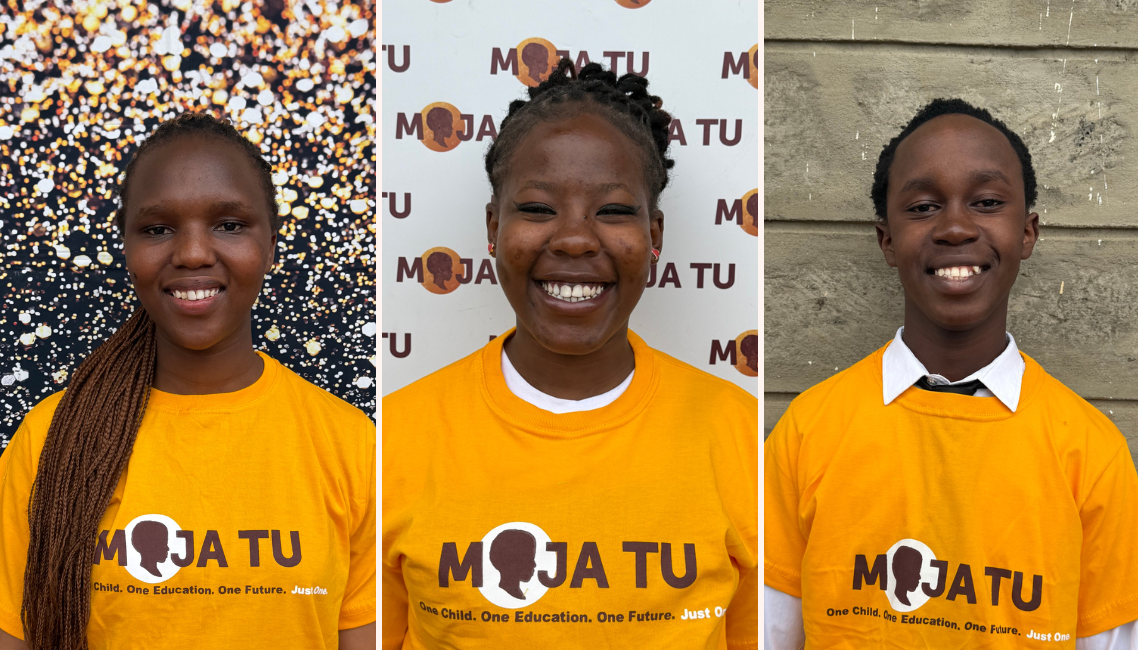
For Moja Tu students Faith, Teresiah and Benson, learning to code offered exactly that opportunity. They came to it from very different academic backgrounds. Faith studies Bachelor of Commerce, Benson is pursuing Veterinary Medicine, while Teresiah joined largely out of curiosity. None of them knew exactly where learning to code would take them.
What they have discovered is that technology can complement almost any field of study and, with the right skills, become a tool for solving problems they see around them.
Starting With Curiosity
Faith had always been interested in technology and wanted to understand what happens behind the websites and applications she used every day. Rather than remain a consumer of technology, she wanted to learn how to create with it.
Teresiah’s introduction was less deliberate. When John, a Moja Tu beneficiary and self-taught coder, shared an opportunity to learn coding, she decided to try. She knew coding had something to do with building websites, but little beyond that. Her motivation was simple: she wanted to find out whether she could learn it.
Benson’s curiosity came from wanting to understand the technology around him. Although his academic path is in Veterinary Medicine, he was interested in how websites and applications were built and whether he could eventually turn his own ideas into digital products.
The beginning was challenging for all three. HTML, CSS and JavaScript brought unfamiliar concepts, syntax and plenty of errors. There were frustrating moments when the code on the screen simply would not do what they wanted it to do.
Rather than stop, they practised, researched, asked questions and tried again. “Coding is not about knowing everything immediately,” is one lesson they took from John’s guidance. “It is about being willing to learn, make mistakes and keep trying until you understand.” Gradually, what had seemed intimidating became manageable.
From Learning to Creating
For Faith, an important breakthrough came when she began seeing her own ideas appear on the screen. Building a webpage from scratch showed her that technology was no longer something she could only use. She could create it.
Benson took his learning further by developing Galaxy Runner, his own game. He worked on its graphics, controls, levels, sounds and menus before eventually getting it to run as an Android application.
The process tested his patience. Debugging could mean changing one thing only to discover that the entire game had stopped working. Limited internet access sometimes made finding solutions harder. Benson learned to examine each error, understand what had caused it and work through the problem step by step.
Seeing Galaxy Runner finally running on his phone gave him tangible evidence of what persistence could produce.
Teresiah discovered another side of learning when she began helping a fellow student understand coding. Her proudest moment was watching that student ask questions, follow her explanations and eventually create something independently. She had started out unsure whether she could even learn coding herself. Now she was teaching someone else.
The experience showed all three students that mistakes are not necessarily signs that they cannot do something. Often, they are part of learning how to do it better. Along the way, they have developed patience, problem-solving skills, creativity and confidence that extend beyond coding.
Technology With a Purpose
As their skills have grown, so has their thinking about what they could create. Faith hopes to develop a platform connecting young people with affordable learning opportunities, scholarships, mentorship, training and jobs. She sees technology as one way of helping other young people build skills and work towards financial independence.
Teresiah also wants to use technology to connect people with opportunities. Her idea is an application bringing together people who need support, organisations that can provide it and individuals who want to give back. Young people could use the platform to find scholarships, internships, mentorship, training and learning materials.
Benson sees possibilities within the field he already loves. He hopes to combine coding with Veterinary Medicine by developing an application that connects animal owners with nearby veterinary services, provides basic animal-health information and sends vaccination reminders.
Their ideas are still developing, and that is part of the learning process. What matters at this stage is that three students who began by wondering whether they could code are now asking a different question: What can we build with what we know?
That shift is why opportunities to develop practical skills matter. Education gives young people knowledge, while exposure to new skills can help them find different ways to apply it.
Faith, Teresiah and Benson may ultimately take their coding skills in very different directions. For now, they are continuing to learn, experiment and create, one line of code at a time.