
In many of the communities where Moja Tu works, the barrier to reading was never a lack of appetite. It was access. A good national school is often out of reach before a child ever opens the door to it, priced out by school fees that a family in a place like Naivasha, Nakuru County, simply cannot carry. And even for the students who do make it through that door, the books that shape a person outside the syllabus — the ones that teach self-belief, discipline, or how to think about failure — rarely make it into the house. There is no library nearby, no spare income for a novel, and no one handing over a book that might change how a young person sees their own life.
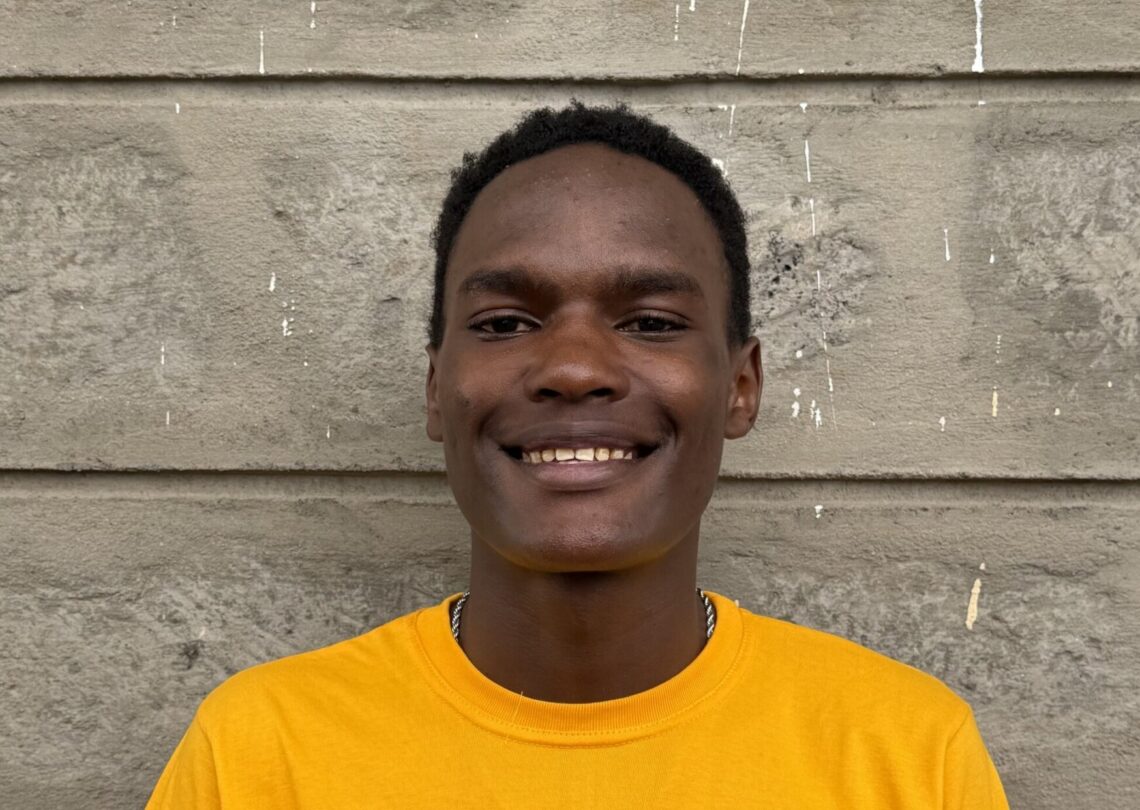
This is the quieter half of what Moja Tu does. Alongside school fees and mentorship, it puts books directly into the hands of the students it supports, and for John Mbugua, one of those books did more than fill an afternoon. It changed the questions he was asking about his own mind.
A School, Then a World Beyond It
John grew up in Naivasha, and the plan to attend a strong national high school seemed unlikely for a long time. “Before joining Moja Tu, the dream of joining a good national high school was so dim because of the financial constraints that my family used to face,” he says. Moja Tu’s support changed that, placing him at Baricho Boys, a well-performing school in Kenya. “I was able to access high-quality education and exposure to life outside home that shaped who I am today,” he says.
 That exposure continued well past secondary school. John is now pursuing a degree in Agribusiness Management at the University of Nairobi, and he credits Moja Tu with far more than tuition. “Apart from the education facilitation, Moja Tu has offered countless opportunities for self-growth and expression,” he says, pointing to the organization’s communities built around communication, career preparedness, and portfolio-building. Among them, a recent addition stood out. “Not long ago, Moja Tu introduced a book club, which I’ve found very handy in personal growth,” he says. “We are given access to whichever books, whether needed in soft copy or hard copy, to quench the thirst of curiosity in whatever fields one pursues.”
The Book That Changed the Question
John’s habit of reading did not begin with the book club. It began by accident, in his first year on campus, when a friend left a book behind in his room. “One day out of idleness, I picked up the book and read the synopsis and started diving into the book,” he says. He was struck by how directly it addressed parts of life people rarely examine and by how much sharper a person’s performance could become once they did.
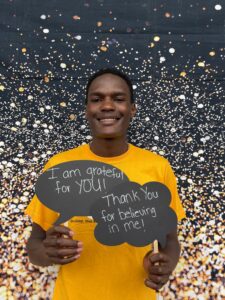 But a second book, handed to him by Maria from Moja Tu, turned reading from a curiosity into a discipline. The book was Can’t Hurt Me by David Goggins, and its central idea — to master your mind and defy the odds — gave John a frame for something he had already sensed but hadn’t named. “In all endeavors of human undertakings, the only factor that truly sets the bar for the winners is how well you master your mind,” he says. He has since read it four times, and it opened the door to a wider shelf: Atomic Habits by James Clear, The Mountain Is You, and others that turned into a running study of how belief shapes behavior.
What John describes reading giving him is not entertainment but instrumentation, a way of examining his own thinking. “One of the most fundamental skills I’ve learnt from book reading is self-awareness and esteem,” he says. “The attributes to seek and gain, and the others that need to be deleted for a better me, have changed who I am today as opposed to who I was a few years ago.”
A Habit Worth Passing On
John is candid about why he thinks this matters beyond his own life. Social media, he argues, is built for entertainment, while the record of hard-won knowledge that could actually shorten someone’s path still sits mostly in books, written by people who worked through the same problems years or decades earlier. “Taking time to read books could actually give you more time to unravel more information from the point where the other experts and mentors left off,” he says.
He also sees a link between reading and something closer to civic life: the willingness to take responsibility rather than blame circumstance. “There would be a huge difference if young people developed a love and habit for reading,” he says. “Reading books would teach the young generation to own their mistakes and reveal psychological problems that most humans deal with, thus solving most problems in the world, partially.” For a young person just starting out, his recommendations are deliberately accessible: You Can Heal Your Life by Louise Hay, Atomic Habits by James Clear, and The Power of the Subconscious Mind by Joseph Murphy.
John’s story is one student’s account of what happened after someone handed him a book at the right moment. It is also a small, specific illustration of what Moja Tu is built to do at scale: pair the financial support that gets a student through the school gate with the books, mentors, and community that determine what he does once he’s through it. On World Literacy Day, that distinction is the one worth sitting with; literacy opens a door, but it takes access and someone willing to hand a young person the right book and walk them through it.