
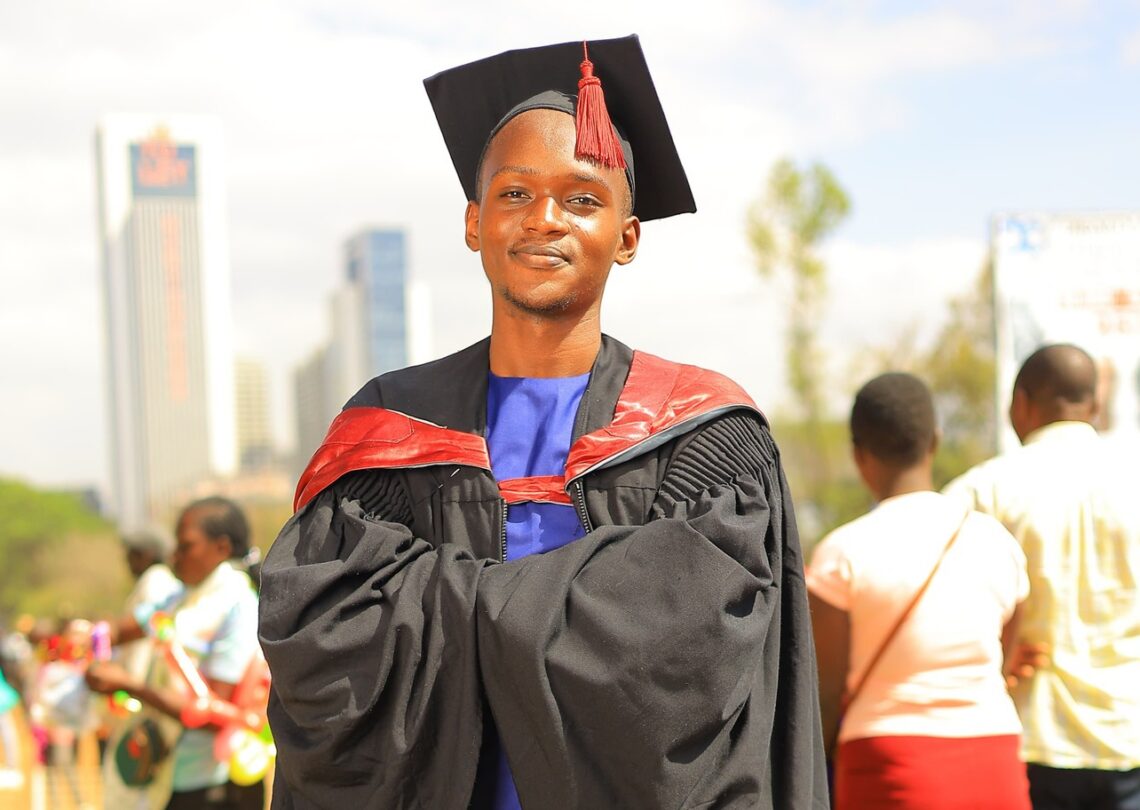
The support a student receives while growing up can shape the support they later give others. For Johnstone Mbondo, that support arrived when school fees threatened to interrupt his education. It eventually led him somewhere he had not expected: a classroom, where he now hopes to give his own students something better than what he almost lost.
A Family’s Weight on One Student
Growing up between Nairobi and Masinga, Johnstone learned early that education mattered deeply to his family. His father had wanted to become a lecturer, and that unfulfilled ambition became a quiet motivation behind everything Johnstone did. Another source of motivation was an older sister just ahead of him in school, against whom he measured every exam result.
“I grew up knowing and understanding that education was the great deal and I had to do it,” he says.
Primary school came easily. High school at Mang’u was different. Johnstone found his footing on the volleyball court as much as he did in the classroom. But underneath the good grades was a persistent problem: school fees. Some terms he arrived late because the money was not ready, and others he arrived without enough basic supplies.
“Sometimes I went back to school without enough shopping,” he recalls. “It was not pleasant.”
That changed in his second term of Form One, when Johnstone joined Moja Tu. He remembers walking into his interview with Kathy and Michael feeling nervous, unaware that the meeting would mark the beginning of what he now describes as the best period of his high school life.
Moja Tu covered his school fees, provided shopping, and made sure he had fare home during breaks. Holiday tuition and extra revision textbooks followed. So did encouragement. Moja Tu celebrated students who performed well, and Johnstone made himself a private promise never to miss that list.
“It made my experience in high school fun, better, and worth remembering,” he says.
Learning to Teach
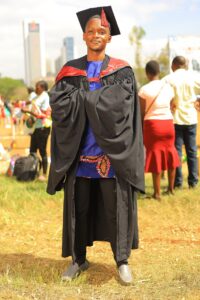 Johnstone graduated from the University of Nairobi in 2025 with a Bachelor’s degree in Education Science, majoring in Mathematics and Physics. But becoming a teacher was not always part of the plan. During his teacher training, he admits he was reluctant about the profession he was preparing to enter.
Teaching practice changed his mind. Placed in front of students for the first time, Johnstone took on a struggling class whose students had complained that they were not being taught clearly. He worked with them term by term and watched their class ranking rise from last place, 13th out of 13, to fourth in just three months.
“This made me so proud,” he says. “I left the students knowing how to get things done for themselves.”
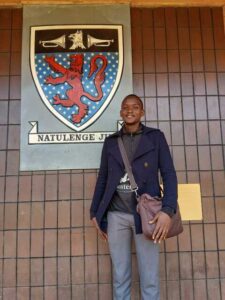 An internship at Starehe Boys’ Centre sharpened his skills further. Working alongside experienced teachers at one of Kenya’s well-known schools gave him exposure and confidence. By his own account, he was the quiet one at first, uneasy about standing in front of a classroom. But watching experienced teachers manage their students taught him that good classroom management begins with preparation and understanding each student’s weaknesses.
His transition to full-time teaching came through the same quiet consistency. Working closely with a colleague, Caleb, who encouraged him to keep raising his standards, Johnstone was recommended for the role by the school’s heads of Mathematics and Physics.
For Johnstone, the opportunity carries meaning beyond his own career. He sees it as a way of demonstrating what a Moja Tu student can do and helping create trust for those who may come after him.
What He Hopes to Pass On
Today, Johnstone defines good teaching not simply by the grades a class produces, but by whether students leave his classroom knowing how to think for themselves.
He does not plan to remain in the classroom indefinitely. His ambitions include pursuing a master’s degree in education and eventually moving into school administration, with the goal of becoming a senior principal at one of the country’s major schools.
For now, however, he is focused on the students in front of him.
His story began with people who invested in his education before he had proven what he could achieve. At a time when school fees and basic supplies threatened to interrupt his education, Moja Tu helped remove some of those barriers and gave him room to focus on learning.
Years later, Johnstone is standing in a classroom of his own. The support he once received has become part of what he carries into his work, shaping how he teaches and what he hopes his students will one day carry forward.